When Marjorie Taylor Greene declared that “parents will tell their children about this Iran war effect someday,” she wasn’t issuing a prediction—she was framing a warning. Her statement, delivered with the sharp tone characteristic of her public appearances, cuts through the usual noise of congressional rhetoric. It taps into a deeper anxiety: that decisions made today on foreign policy, especially around Iran, will echo across generations.
This isn’t just about war. It’s about legacy—how future Americans will understand the choices made by leaders today. Greene’s phrasing isn’t accidental. “Parents will tell their children” evokes memory, history, and intergenerational consequence. It shifts the conversation from immediate political theater to long-term national impact. Understanding what she meant—and why it resonates—requires unpacking not just her words, but the geopolitical realities behind them.
The Statement in Context
Greene made her remarks during a floor speech in the U.S. House of Representatives, amid heated debate over military aid packages and intelligence briefings on Iranian activities. While she didn’t explicitly call for war, she emphasized the risks of inaction, citing Iranian support for proxy forces, nuclear program advances, and attacks on U.S. personnel in the Middle East.
Her exact words—“parents will one day sit their children down and tell them about the Iran war effect”—serve as both a rhetorical device and a political signal. It mirrors historical phrasing used during pivotal moments: “Where were you when Pearl Harbor happened?” or “I remember exactly what I was doing when the towers fell.” Greene is attempting to position current tensions as a defining national inflection point.
This kind of language isn’t new in American politics. Leaders have long used generational framing to justify urgent action. But Greene’s version stands out because it assumes the outcome—that there will be a war, not if. It’s a narrative of inevitability, which can be as powerful as a call to arms.
Why the “Iran War Effect” Resonates Now
Iran has been a flashpoint in U.S. foreign policy for decades. But recent developments have reignited fears of direct conflict:
- Iran’s expanded uranium enrichment, nearing weapons-grade levels
- Drone and missile attacks on Israel and U.S. bases in Syria and Iraq
- Cyberattacks targeting critical infrastructure
- Support for militant groups like Hezbollah, Hamas, and the Houthis
Each escalation increases the likelihood of a broader military confrontation. And when that happens, the “effect” Greene refers to won’t be limited to battlefields. It will ripple through energy markets, immigration patterns, military deployments, and domestic security policies.
Consider the aftermath of the 2003 Iraq War. Parents did end up explaining that war to their children—not just its cause, but its long shadow: the rise of ISIS, regional instability, veterans’ struggles, and erosion of public trust in intelligence. Greene is suggesting the Iran conflict could be similarly transformative, if not more so.
But here’s the catch: there is no declared “Iran war” today. What exists is a state of sustained tension—what some analysts call a “gray zone conflict.” Greene’s statement blurs that line, treating ongoing hostilities as the prelude to full-scale war. That’s a deliberate framing, one designed to rally support for a more aggressive posture.
The Power of Political Storytelling
Greene’s comment isn’t just policy—it’s storytelling. And in politics, narrative often matters more than nuance.

By invoking parents and children, she activates emotional memory. She positions herself not just as a congresswoman, but as a guardian of national legacy. This tactic is effective because it bypasses analytical debate and appeals directly to identity and fear.
Other politicians have used similar strategies:
- George W. Bush, post-9/11: “Freedom is at war with fear.”
- Barack Obama, on Syria: “What kind of world do we want to live in?”
- Nancy Pelosi, on January 6: “This will go down in history.”
Each of these statements sought to anchor current events in future memory. Greene is doing the same, but with a more confrontational edge. Her version assumes a darker outcome—a war so significant it becomes part of family history.
But there’s a risk in this kind of rhetoric. When leaders speak as if war is inevitable, they can help make it so. Public opinion shifts. Allies prepare. Adversaries dig in. Words become self-fulfilling prophecies.
Real-World Consequences of Escalation
If a U.S.-Iran war does occur, the effects Greene predicts would unfold in multiple dimensions.
Economic Impact: Iran sits at the mouth of the Strait of Hormuz, through which about 20% of the world’s oil passes. Any conflict could disrupt shipping, spike global oil prices, and trigger inflation. The last major spike in 2022—from俄乌 conflict—showed how quickly fuel costs can destabilize households. A Middle East war would be worse.
Military Readiness: The U.S. has over 40,000 troops stationed across the Middle East. A war with Iran would require massive redeployment, extended deployments, and likely a surge in recruitment or even draft discussions. Families would face years of uncertainty.
Domestic Security: After 9/11, the U.S. created the Department of Homeland Security, expanded surveillance, and passed the Patriot Act. A major conflict with Iran could trigger similar measures—increased monitoring, travel restrictions, and civil liberties debates.
Cultural Memory: Wars change national identity. Vietnam shaped a generation’s distrust of government. The Gulf War introduced 24-hour news coverage of combat. An Iran war could redefine America’s role in the Middle East—and how future generations view military intervention.
Greene’s claim gains weight because these outcomes are plausible, not fantastical. The question isn’t whether something could happen—but whether treating it as inevitable helps prevent it, or accelerates it.
Criticism and Counterarguments
Not everyone agrees with Greene’s framing. Critics argue she’s exaggerating the threat for political gain.
Some key counterpoints:
- No Active Declaration of War: The U.S. has not authorized war with Iran. Military actions so far have been limited strikes in response to specific attacks.
- Diplomacy Still in Play: Nuclear negotiations, though stalled, have worked before. The 2015 JCPOA temporarily curbed Iran’s program.
- Risk of Overreaction: History shows that fear-driven decisions—like the Iraq War’s WMD justification—can lead to costly mistakes.
- Partisan Motives: Greene has a history of inflammatory statements. Some see this as more performative than policy-driven.
Moreover, not all lawmakers believe Iran is an imminent threat. Some argue that containment, deterrence, and diplomacy remain viable strategies. They warn that treating every provocation as a prelude to war undermines long-term stability.
There’s also the question of timing. Greene’s statement came during a period of heightened election-year rhetoric. War warnings often spike before midterms or presidential votes—when national security becomes a key campaign issue.
What “Telling the Children” Really Means
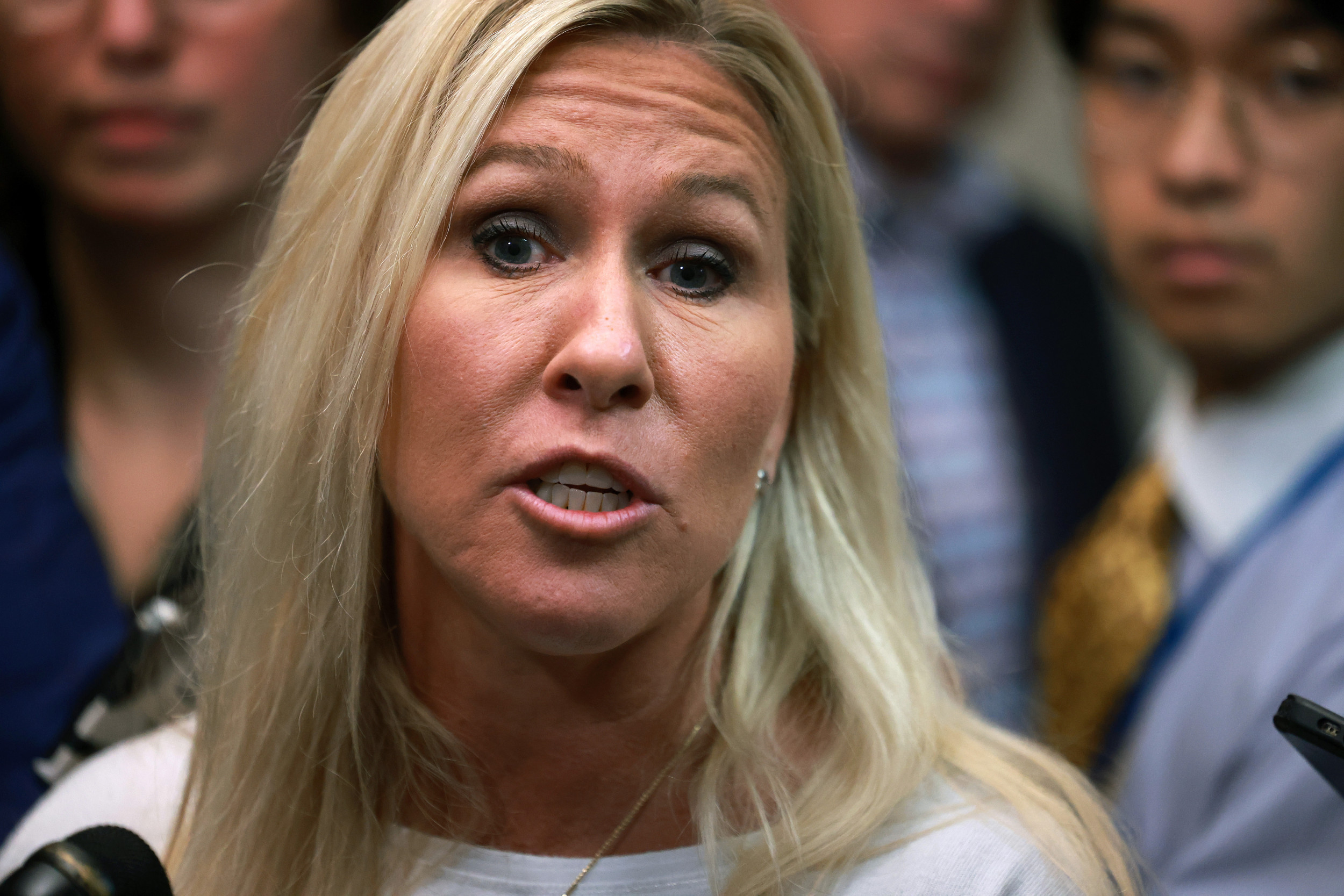
When Greene says parents will “tell their children” about this moment, she’s referencing a deeper cultural pattern: how societies process trauma and turning points.
Think about how families talk about:
- The Great Depression
- World War II
- The Civil Rights Movement
- 9/11
These aren’t just history lessons. They’re identity markers. They answer: Who are we? What did we survive? What did we learn?
By placing the Iran conflict in that category, Greene is attempting to elevate it beyond policy debate. She wants it remembered not as a series of drone strikes or sanctions, but as a defining era—like the Cold War.
But for that to happen, the event must meet a threshold of scale and consequence. The Iran tensions today haven’t reached that level. Yet.
Whether they will depends on decisions being made now: in the White House, in Congress, in Tehran.
A Call for Clarity, Not Just Alarm
Greene’s statement, however provocative, does force a necessary question: Are we sleepwalking into a conflict whose consequences we haven’t fully weighed?
Instead of accepting inevitability, leaders should focus on clarity:
- Define the Threat: Is Iran pursuing nuclear weapons? At what pace? With what intent?
- Clarify Objectives: What does success look like? Regime change? Deterrence? Diplomatic agreement?
- Assess Costs: What are the human, economic, and strategic costs of war versus containment?
- Engage the Public: Americans deserve honest discussion, not just soundbites about future generations.
Rhetoric has power. But so does responsibility. If parents do end up telling their children about an Iran war, let it be a story of foresight—not failure.
Moving Forward: What Should Be Done?
Rather than stoke fear, policymakers should pursue a balanced strategy:
- Reinforce Diplomacy: Restart backchannel negotiations, even if public talks stall.
- Strengthen Alliances: Work with regional partners like Jordan, Egypt, and Gulf states to build a united front.
- Invest in Intelligence: Improve real-time monitoring of Iranian activities to avoid missteps.
- Prepare the Public: Offer transparent briefings on threats and options—without alarmism.
- Set Red Lines Clearly: Communicate consequences for Iranian actions, but avoid open-ended escalation.
The goal shouldn’t be war—it should be deterrence. A stable, if tense, balance of power is preferable to a conflict that reshapes the world in unpredictable ways.
Greene’s warning, however dramatic, reminds us that foreign policy isn’t abstract. It’s personal. It’s generational. And it demands more than slogans.
Frequently Asked Questions
What did Marjorie Taylor Greene say about the Iran war? She stated that “parents will one day tell their children about this Iran war effect,” suggesting current tensions will have long-term, generational consequences.
Is the U.S. currently at war with Iran? No. While there have been military clashes and proxy conflicts, there is no declared war between the U.S. and Iran.
Why is Iran a concern for U.S. national security? Iran is advancing its nuclear program, supports militant groups hostile to U.S. allies, and has attacked U.S. forces in the region.
Could Greene’s statement be seen as fear-mongering? Some critics argue her language exaggerates the threat for political effect, especially during election cycles.
What are the potential consequences of a U.S.-Iran war? Major disruptions to global oil supplies, increased military deployments, higher defense spending, and long-term geopolitical instability.
Has Congress authorized war with Iran? No. Any large-scale military action would require congressional authorization, which has not been granted.
How should the public respond to such warnings? With informed skepticism—demanding transparency, considering alternatives to war, and holding leaders accountable for their rhetoric.
FAQ
What should you look for in Marjorie Taylor Greene Warns of Iran War’s Lasting Impact? Focus on relevance, practical value, and how well the solution matches real user intent.
Is Marjorie Taylor Greene Warns of Iran War’s Lasting Impact suitable for beginners? That depends on the workflow, but a clear step-by-step approach usually makes it easier to start.
How do you compare options around Marjorie Taylor Greene Warns of Iran War’s Lasting Impact? Compare features, trust signals, limitations, pricing, and ease of implementation.
What mistakes should you avoid? Avoid generic choices, weak validation, and decisions based only on marketing claims.
What is the next best step? Shortlist the most relevant options, validate them quickly, and refine from real-world results.